
Opening the Dough: Hands, Heat, and the Neapolitan Slap
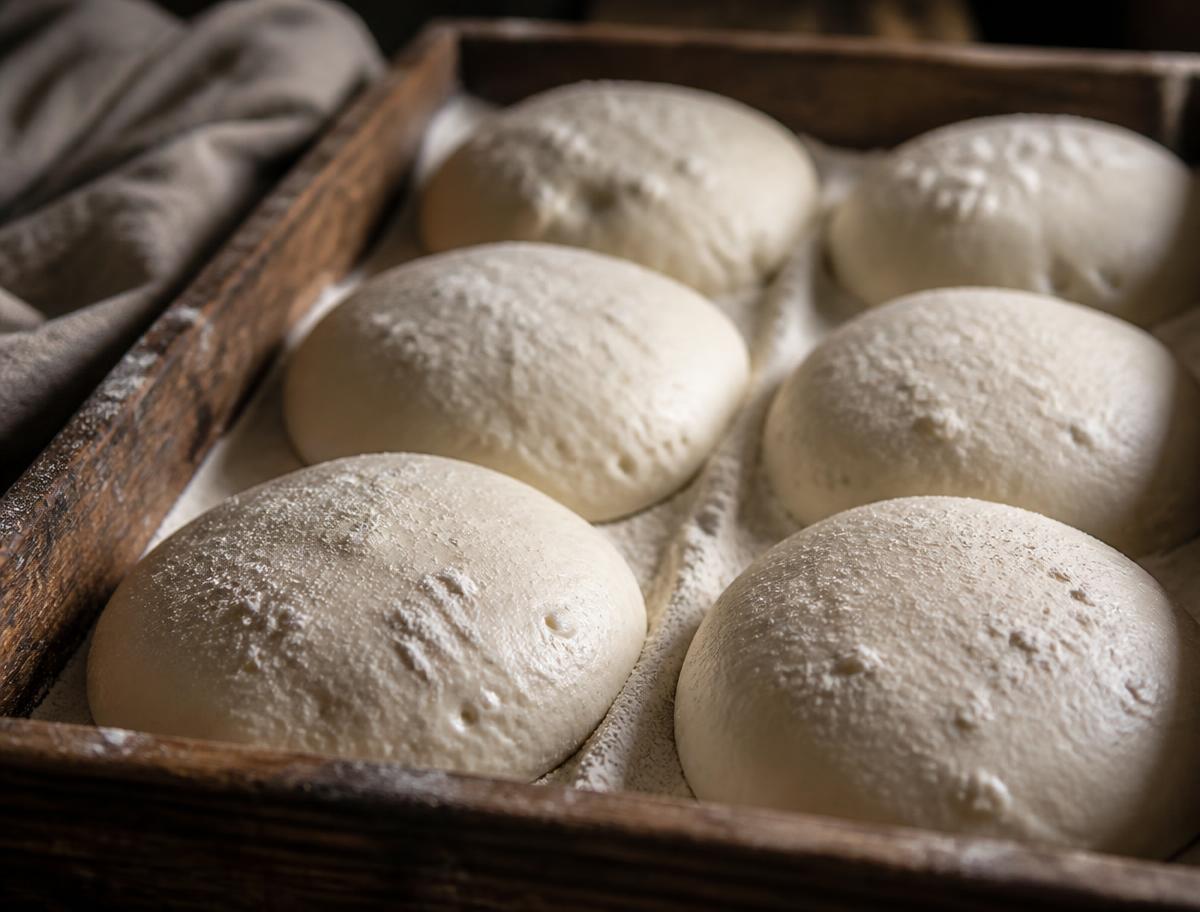
A true Neapolitan pizza is won or lost long before it touches the peel. It is decided on the bench, where gentle hands and a fast rhythm protect the air inside the dough.
Protecting the Rim on the Bench
When a dough ball has rested properly, it holds a fragile network of carbon dioxide trapped by gluten. The worst thing you can do to it is roll it out. Rolling pins compress those delicate pockets into dense paste, robbing you of the puffed, pillowy rim that defines the style.
Instead, we work strictly with our fingertips. Starting two centimetres inside the edge, press down and push gently outward, guiding the trapped gas toward the outer boundary. You are creating the cornicione, the raised border, while establishing an even centre that is roughly three millimetres thick.
The Neapolitan Slap
The movement Neapolitan pizzaioli call lo schiaffo, the slap, looks theatrical, but it serves two purely functional purposes: stretching the dough evenly and shedding excess flour.
One hand pins the dough while the other lifts, rotates, and lays it back down onto the bench. You rely on gravity and the dough's natural elasticity rather than brute pulling force. A few clean passes will take a 250g ball to thirty centimetres across, perfectly circular, without tearing the fragile centre.
Moisture Management and the Peel
Neapolitan dough is wet, often sitting at 65 to 70 percent hydration. To keep it from sticking to the peel, use coarse rimacinata semola on your bench rather than plain flour. Semola acts like tiny ball bearings, letting the stretched base slide effortlessly without scorching bitter in the oven.
Topping requires restraint. Too much crushed San Marzano tomato or watery cheese will turn the centre into soup. Always drain your fior di latte in a colander overnight. A light hand with cheese, a thread of extra virgin olive oil, and two or three torn basil leaves are all the crust needs to balance.
Ninety Seconds at 450°C
In a dome running at 450°C, baking is not a passive waiting game. It is an intense, ninety-second sprint. The radiant heat from the stone floor instantly vaporises water in the base, expanding the trapped gas pockets into high, airy domes within fifteen seconds.
A long-handled turning peel enters the oven almost immediately. You lift the edge to inspect the char, rotating the pie away from the live flame so it colours evenly. When pulled onto the counter, the crust should carry tiny dark blisters, leopard spots, smelling faintly of toasted grain and wood smoke.
A Living Standard in Kirkstall
While our counter at COTTO often celebrates crisp Roman-style rectangular slices and slow 72-hour cold-fermented doughs, the pure Neapolitan craft remains our compass. It teaches you how flour breathes, how water behaves under pressure, and how to respect high heat.
Whether you are baking in a dedicated outdoor oven in a Leeds garden or eating straight off our boards down Kirkstall Road, great pizza is always about touch, temperature, and getting out of the way of good ingredients.