
The Sixty-Second Bake: Moisture, Fire, and the Cornicione
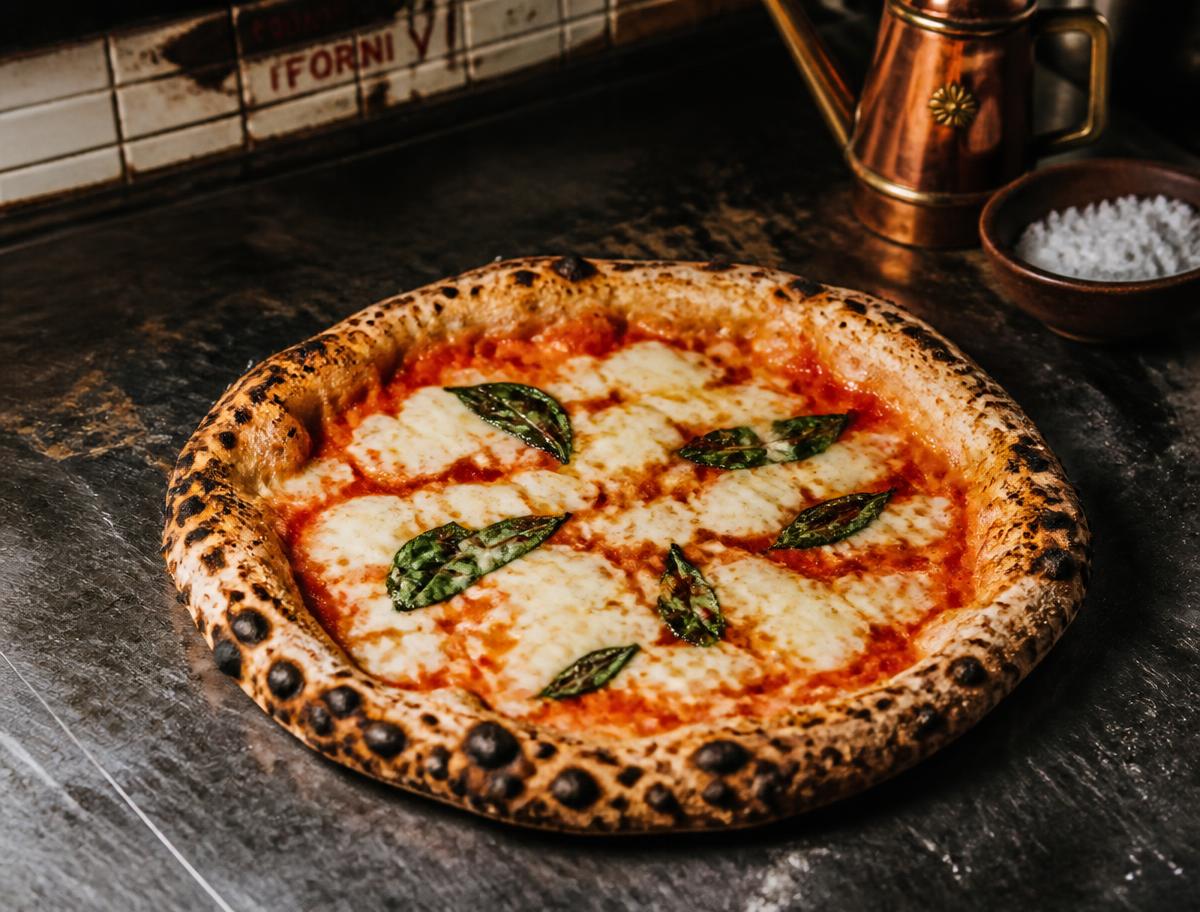
True Neapolitan pizza is an exercise in extreme heat and delicate moisture control. Understanding how fire, stone, and dough collide in sixty seconds reveals why this ancient style remains unmatched.
The Physics of 450 Degrees
Step near the mouth of a roaring wood-fired oven and the heat hits your face like a physical wall. To bake a true Neapolitan pizza, the oven floor must sit around 430°C to 450°C, with the dome air running even hotter. At these temperatures, baking ceases to be a slow evaporation of water and becomes an explosion of steam.
In sixty to ninety seconds, the water trapped inside the fermented dough turns violently to vapor. It rushes upward, caught by the web of gluten, ballooning the rim into the airy, pillowy ridge known as the cornicione. If the oven drops below 400°C, you lose that immediate lift: the crust dries out, turns biscuit-crisp, and misses that soft, tender chew that defines the classic style.
The Battle with Moisture
Heat alone will not save a pizza burdened by water. A traditional Margherita carries wet San Marzano tomatoes and fresh mozzarella, both loaded with liquid. If you dump freshly sliced fior di latte straight onto the dough, the cheese will pool, boiling into a pale, milky lake that soaks the center of the base into wet paste.
Pizzaioli in Naples manage moisture with ruthless precision. Fresh cheese must be sliced hours in advance and left to drain in perforated pans. When we handle dairy and toppings at COTTO in Kirkstall, whether preparing classic rounds or our Roman-style slices, respect for moisture balance is absolute. The cheese should melt and lightly scorch, never simmer.
Sauce and Fat in the Furnace
There is no precooking the sauce in Neapolitan pizza craft. Ripe San Marzano plum tomatoes are crushed cold with a pinch of sea salt, nothing more. Cooking them on the stove beforehand strips their bright, metallic acidity and turns them jammy, which ruins the freshness once they meet the fire.
A thin swirl of extra virgin olive oil over the raw tomato does something quiet and vital. Under direct flame, the fat binds with the tomato juices, creating an impromptu emulsion right on the dough. The sauce cooks in its own steam for less than two minutes, keeping its vibrant garden sweetness intact against the char of the crust.
The Dance of the Turning Peel
The moment the peel slides the disc onto the refractory stone, the clock starts ticking. The bottom sets within twenty seconds. Leave it untouched near the burning embers for five seconds too long, and the base will blacken into bitterness instead of gathering gentle leopard spots.
The baker slips a small, circular turning peel under the dough, rotating the pizza through ninety degrees while keeping it on the same spot or shifting it slightly away from hot spots. You lift the pizza slightly toward the radiant heat of the dome right at the end, kissing the cornicione with flame before pulling it clear to rest on the counter.